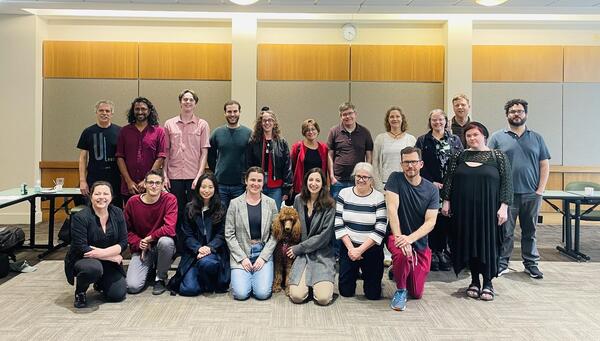
Christiane Bailey - "Impératifs biologiques"

Date

Wednesday May 28, 2025
11:30 am - 1:00 pm

Location

Hybrid: Longueuil campus of the Université de Sherbrooke (room L1-11305 in general; room L1-3455) and online

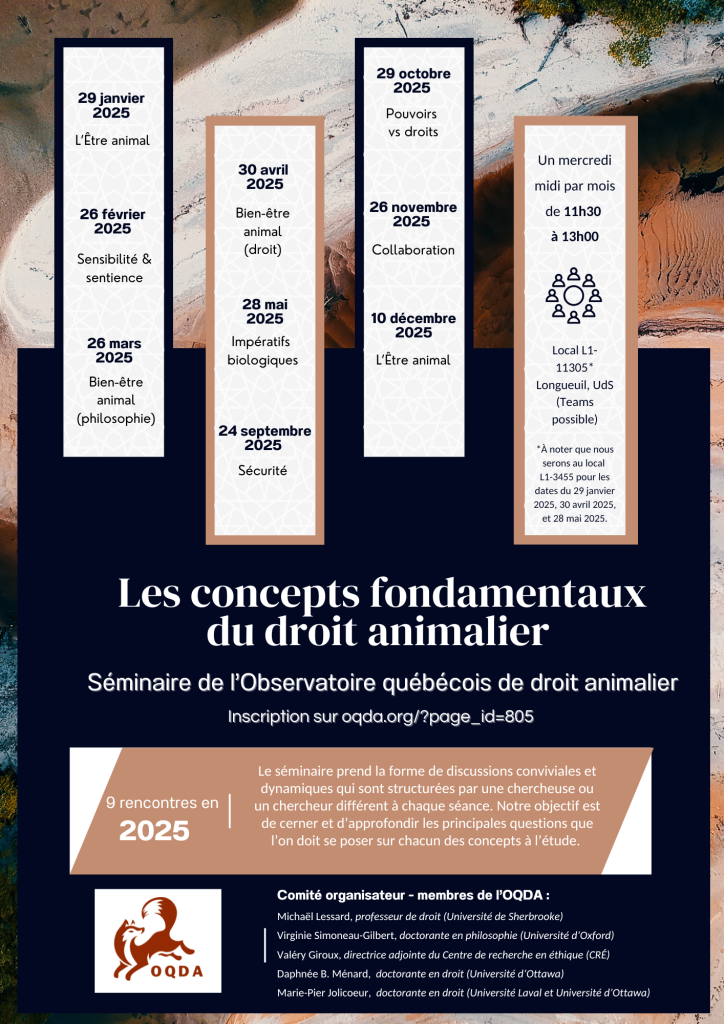
Le Séminaire sur les concepts fondamentaux du droit animalier est une série de rencontres mensuelles destinées à approfondir la compréhension des concepts clés du droit animalier. Chaque séance explore un concept particulier, notamment les notions d’être, de sensibilité, de bien-être, d’impératifs biologiques, de sécurité, de pouvoirs juridiques et de collaboration. 

Inscription requise : https://forms.office.com/r/ZK1iZx1FHR

Déroulement

La séance dure 1h30, le dernier mercredi du mois, de 11h30 à 13h.

Chaque séance vise à cerner un concept en particulier et les pistes d’interrogation afférentes propres au contexte du droit animalier. Une personne anime et structure une discussion conviviale et dynamique entre les participant·es.

La rencontre a lieu en format hybride. La majorité du groupe se rencontre au campus de Longueuil de l’Université de Sherbrooke (local L1-11305 en général; local L1-3455 les 29 janvier 2025, 30 avril 2025, 28 mai 2025). Un accès Zoom est mis à la disposition des participant·es sur demande.

Organisation

Le Séminaire est organisé par Valéry Giroux, Marie-Pier Jolicoeur, Michaël Lessard, Daphnée B. Ménard et Virginie Simoneau-Gilbert sous l’égide de l’Observatoire québécois de droit animalier, le tout en collaboration avec le Groupe de recherche sur les humanités juridiques, le Groupe de réflexion en droit privé, le Centre de recherche en éthique et le Groupe de recherche en éthique environnementale et animale.

Calendrier

Date Concept

Présentation

29 janvier 2025 Être Michaël Lessard
26 février 2025 Sensibilité / sentience Hania Kassoul
26 mars 2025 Bien-être (approches philosophiques) Virginie Simoneau-Gilbert
30 avril 2025 Bien-être (approches juridiques) Daphnée B. Ménard
28 mai 2025 Impératifs biologiques Christiane Bailey
24 septembre 2025 Sécurité Catherine Anne Morin
29 octobre 2025 Pouvoirs juridiques vs droits subjectifs Alexandra Popovici
26 novembre 2025 Collaboration Marine Lercier
10 décembre 2025 Être À venir

On Animal Liberty

Date

Thursday October 31, 2024
4:00 pm - 6:00 pm

Location

Watson Hall, Room 517

Serrin Rutledge-Prior, Queen's postdoc in Animal Ethics, will be presenting her talk "On Animal Liberty" to the Queen's Department of Philosophy Colloquium on October 31, 2024. This talk will take place from 4-6 pm in Watson Hall, Room 517. All welcome!


Embodied Institutional Work

Date

Friday September 27, 2024
11:00 am - 12:30 pm

Location

Watson Hall, 307

On the 27th of September 2024, Doris Schneeberger (University of Vienna) will present her paper “Embodied Institutional Work.” She will discuss animal sanctuary politics, ethnographic methods in animal studies, and strategies for social change. The discussion will take place from 11:00-12:30 on the 27th of September. If you are interested in attending the discussion, please contact Sue Donaldson to receive a copy of the paper to be read in advance (sld8@queensu.ca).


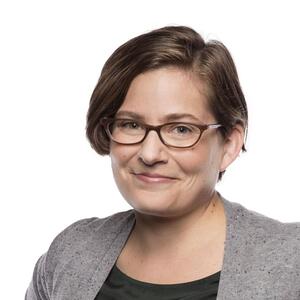
Jessica Eisen

Jessica Eisen Photo

Jessica Eisen

Associate Professor of Law and Visiting Scholar

Jessica Eisen is an Associate Professor at the University of Alberta Faculty of Law and a Visiting Scholar at Queen's Law (2024/2025). Her research interests include animals and the law, constitutional and comparative constitutional law, equality and antidiscrimination law, feminist legal theory, and law and social movements. Professor Eisen’s research has been published in the Journal of Law and Equality; Animal Law Review; Canadian Journal of Poverty Law; Transnational Legal Theory; Queen’s Law Journal; ICON: International Journal of Constitutional Law; the Berkeley Journal of Gender, Law & Justice; and elsewhere.


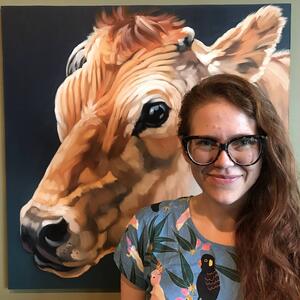
Serrin Rutledge-Prior

Serrin Portrait

Serrin Rutledge-Prior

Postdoctoral Fellow in Animal Ethics

Serrin began a Postdoctoral Fellowship in animal ethics in the Philosophy Department at Queen’s University in 2024. Here, she will primarily be working on a couple of research projects: one that explores how we can better recognise and respond to the agency of animals in interpersonal, political, and legal contexts, and another which seeks to acknowledge and reimagine the role of animals within the history of Western political thought. Beyond these topics, she is also interested in the role of animal advocates in the public sphere, and when or whether civil – or even uncivil – disobedience on behalf of animals can be justified. Prior to coming to Queen’s, Serrin was a Visiting Researcher at the Cambridge Centre for Animal Rights Law (2024), and a Research Fellow at the Australian National University’s Crawford School of Public Policy (2023-24). She has also volunteered for several years with one of Australia’s first community legal centres dedicated to issues in animal law: the Animal Defenders Office, based in Canberra/Ngunnawal Country. Serrin’s first book, tentatively titled Multispecies Legality: Animals and the Foundation of Legal Inclusion, is under contract with Cambridge University Press.


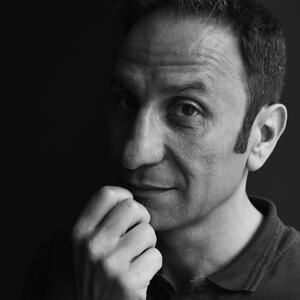
Carlo Salzani

Portrait of Carlo Salzani

Carlo Salzani

Research Fellow

Philosophy

University of Innsbruck


Carlo Salzani is Research Fellow in the Department of Philosophy of the University of Innsbruck, Austria, Guest scholar at the Messerli Research Institute of Vienna, Austria, and faculty member of the Paris Institute of Critical Thinking (PICT). His research interests include biopolitcs, political philosophy, critical animal studies, and literary animal studies.


Brenna MacDougall

Brenna MacDougall.

Brenna MacDougall

PhD Candidate

Cultural Studies

Brenna MacDougall is a PhD candidate in Cultural Studies at Queen's University. Her dissertation is focused on providing a posthuman account of the public: one that seeks to challenge the longstanding anthropocentrism this concept carries, while working to recognize nonhumans as political members and important contributors in the creation and maintenance of such a polity.  Her other interests include modernist literature and Joyce studies (with a specific focus on Finnegans Wake), the Arts and Crafts movement, pop surrealism, and her painting and sculpting practices.

Workshop: Violence, Animals, and Zoodemocracy

Start Date

Saturday May 4, 2024

End Date

Sunday May 5, 2024

Time

9:00 am - 3:00 pm

Location

On May 4, 2024, APPLE will host a Junior Scholar’s Workshop at Queen’s on Violence, Animals, and Zoodemocracy. The workshop is devoted to the recent work of APPLE postdoctoral fellow, Pablo Perez Castelló.

The first session, “Is Seeing Believing?”, draws on material from a book-in-progress chapter about an ongoing puzzle confronting social justice movements and political scientists/theorists, namely: Why does knowing about injustice not lead to political transformation? For example, in recent decades the extent of undercover footage, media coverage, and mainstream documentaries exposing what happens in slaughterhouses and factory farms has dramatically increased. Yet, to the consternation of animal advocates, this has not prompted demands for change. Pablo’s work challenges the idea that seeing is believing, arguing that this neglects the role that language plays in shaping our very subjectivities to hold dominion over animals, and hence humans’ ability to “see” violence against animals. It is belief that shapes what is seen, not the other way around.

The commentator for the first session is Dinesh Wadiwel, Associate Professor in Human Rights and Socio-legal Studies, University of Sydney.

The second session, “Centring Animals”, focuses on identifying the methodological, conceptual, and normative conditions for reducing the violence that humans inflict on animals and to co-author a more just future together. A number of scholars in various fields argue for the need to start from the voices of the oppressed, and recently this has included animal theorists insisting that thinking about animals and developing an account of interspecies justice should start from animals’ own points-of-view. While welcoming the call to “centre animals”, Pablo’s work argues that the use of this terminology is inconsistent, leading to incompatible visions of justice. His work addresses what it means to centre animals, why this matters, and provides a normative framework for centring animals in practice.

The commentator for the second session is Angie Pepper, Lecturer at the School for Arts, Humanities and Social Sciences, University of Roehampton.

The third session, “On Animal Self-Governance”, focuses on a separate paper that makes an intervention in the political turn in animal rights theory, arguing that domesticated animals can maintain the socio-political web (the “fabric”) that holds together the political communities they share with humans. Members of democratic communities generally do things that, together, sustain those democracies, whether cooperating, reciprocating, acting according to a sense of justice, helping others, and so on. These practices are framed by social norms and values that help to coordinate actions and resolve conflicts, and without which our political communities would fray. Pablo’s paper explores whether these activities, social norms, and values are also found in multispecies communities such as farmed animal sanctuaries. He does this by analyzing the ethnographic data he gathered at VINE sanctuary during two months of fieldwork.

The commentator for the third session is Stefan Dolgert, Professor in Political Science at Brock University.

Photo of workshop participants
Workshop participants

[Photo credit (cow): We Animals Media -WAM32048]

Workshop: Decolonial Interspecies Justice

Date

Saturday September 3, 2022
9:00 am - 3:00 am

Location

On September 3, 2022, APPLE will co-organize a workshop with Julia Gibson (Antioch University, Keene, Vermont) on “Decolonial Interspecies Justice”, hosted under the auspices of Antioch’s  Environmental Studies Department. The workshop focuses on three broad and inter-related clusters of questions:

• questions concerning the role of land and territory for decolonial (and) interspecies justice. How does land fit into transformative interspecies justice? Can attention to land and territory provide a way of bridging interspecies justice and social justice, particularly issues of colonialism and racial justice?

• conceptual questions about the meaning of justice in interspecies contexts. Is “species” a good framework with which to approach more-than-human justice? Is transformative justice exclusively forward looking, or does it also have an orientation to the past? What are the relationships between restoration, reconciliation, and transformation in particular interspecies contexts under settler-colonialism? Are the different conceptions of transformative and/or decolonial interspecies justice in deep conflict, or do they pull in different directions?

• practical questions of mobilizing goals and strategies, and of models and frames. Are there successful examples or models of decolonial interspecies relations? What coalitions are needed for decolonial interspecies justice? What sorts of narratives help to inspire a commitment to decolonial interspecies justice? How can/must our positionality as settler, Indigenous, or a descendant of enslaved peoples shape our strategies? Can the state, and the law, be a vehicle for transformative justice, or are the spaces for pursuing decolonial interspecies justice always outside of and against state power?
 

Speakers:

  • Charlotte Blattner (Law, University of Berne)
  • Julia Gibson (Environmental Studies, Antioch)
  • Lori Gruen (Philosophy, Wesleyan)  
  • Audra Mitchell (Canada Research Chair in Global Political Ecology, Wilfrid Laurier University)
  • Kelly Struthers Montford (Sociology, University of British Columbia)
  • Rebekah Sinclair (Philosophy, University of Oregon)
  • Jishnu Guha-Majumdar (Politics, Butler University

[Photo Credit: We Animals Media - WAM14260]