Webinar: “Meat, Prey, Love: Human-Animal Relations in the time of COVID”

Date

Tuesday July 14, 2020
4:00 pm - 6:00 pm

Location

Zoom

You can listen to Samantha King’s online lecture on human-animal relations in the time of COVID, on Tuesday July 14, 2020, at 4 pm EDT.

The COVID crisis has highlighted the deep interconnectedness of human and animal worlds. From zoonotic transmission to “pandemic puppies,” more-than-human relations are at the fulcrum of public discourse on the virus. A parallel discussion exposes how white supremacy converges with a microscopic parasite to determine who lives and who dies in the pandemic and beyond. In this lecture, Samantha King seeks to put these discourses in conversation by drawing on the work of scholars who theorize race, colonialism, and species together. Her analysis of meat, prey, and love in the time of COVID explores how the virus and responses to it reflect, reproduce, and challenge colonial myths and infrastructures of racial capitalism.

Samantha King is a Professor of Kinesiology and Health Studies at Queen’s University and member of the research cluster Animals in Philosophy, Politics, Law, and Ethics (A.P.P.L.E.).

Missed the event? Watch it here: 


[Photo Credit: We Animals Media - WAM 31677]

Thinking outside the Cage: Towards a Nonspeciesist Paradigm for Scientific Research

Start Date

Thursday March 27, 2014

End Date

Friday March 28, 2014

Time

9:00 am - 5:01 am

Location

Thinking outside the Cage: Towards a Nonspeciesist Paradigm for Scientific Research was an APPLE-sponsored conference held at Queen’s in March 2014. Scientific research is currently governed on the premise that humans have a right to use sentient animals as subjects of harmful research for our benefit. What would a non-speciesist alternative look like?

We invited leading scientists, public policy experts, humane educators, legal scholars and political theorists to help us identify the opportunities and challenges involved in pursuing a new ethical, legal and political framework regarding animals in research. Can the same legal and regulatory safeguards regarding the use of human subjects in research also be extended to animal subjects? Can questions regarding the treatment of animals within academic institutions be reframed as matters of public responsibility, and made subject to democratic deliberation by the larger community?

Participants included:

  • John Gluck
  • Will Kymlicka
  • Gloria Grow
  • Jonathan Balcombe
  • Olivier Berreville
  • Dan Lyons
  • Vaughan Black
  • Laura Janara
  • Elisabeth Ormandy

This conference encouraged critical reflection on the limits of existing regulations, and inspired creative thinking about alternative frameworks and effective avenues to change. Funding was generously provided by the Abby Benjamin Fellowship program, and the Queen’s Forum for Philosophy and Public Policy.

Workshop on “The Place of Animals in Science: Hidden Costs/Hidden Potential”

Date

Wednesday April 22, 2015
6:00 pm - 8:30 pm

Location

Duncan McArthur Hall, Room A343

This workshop on ethical approaches to science education and inquiry was co-sponsored by APPLE and Queen’s Faculty of Education. It took place on April 22, 2015. The format was a panel discussion featuring experts in humane science and alternatives to dissection and animal use, including an (optional) opportunity for hands-on investigation of alternative pedagogies.

Panelists included:

  • Jan Oakley, Faculty of Education and Women’s Studies, Lakehead University
  • Teresa Lloro-Bidart, Science Education Department, California State University at Chico
  • Olivier Berreville, International Network for Humane Education (InterNiche)

The workshop was aimed in particular at science educators (primary, secondary and post-secondary) and researchers. For a recent commentary on this issue in a leading educational research journal, see “Flint’s Story: Education and Justice for Animals”. 

Workshop on “Political Animals: Agency, Participation, and Representation”

Date

Saturday March 5, 2016
9:00 am - 5:00 pm

Location

Together with Montreal’s Centre for Ethics, APPLE co-sponsored a workshop on March 5, 2016 on the democratic representation of animals, held at UQAMin Montreal.

In recent years, a number of political theorists have argued that all sentient animals, human or otherwise, can be the rightful recipients of justice. Since we live in a world in which animals are, by and large, viewed as resources to be exploited for human ends, they further argue it is imperative that we institutionalize their protection and develop mechanisms for effectively giving voice to their genuine interests. Theorists seeking to include animals within the scope of justice have also typically assumed that democratic institutions are the best way to deliver justice for animals. Consequently, their accounts have either posited political rights for animals or gestured at the need to develop institutional mechanisms for their political representation in order to ensure that appropriate weight is accorded to their interests in human political decision-making. However, given that animals are unable to engage in most formal and informal modes of political participation including voting, holding office, jury service, petitioning, canvassing, and joining a social movement, their capacity for political participation is, on the surface, limited. This limitation, coupled with the epistemic challenge associated with knowing the interests of other animals, gives rise to several theoretical and practical challenges to their inclusion within the democratic sphere. In particular, whether animals themselves have the requisite capacities to ground rights to political participation, precisely what this would entail, and whether alternative modes of proxy representation can be both democratic and effective in their aims.

In light of these considerations, this workshop explored issues pertaining to the democratic representation of animals, including:

  • What are the grounds for the democratic inclusion of animals?
  • Can animals be the bearers of political rights?
  • Do animals have political agency?
  • In what ways might we enable the political voice of other animals?
  • How do we get at the authentic interests of other animals?
  • What institutional mechanisms might be deployed to represent the interests of animals? Are such mechanisms compatible with democratic values?
  • Do our duties to other animals generate an irresolvable tension between the values of justice and democracy?

Our four main presenters were:

  • Dan Hooley (PhD student, Philosophy, University of Toronto
  • Eva Meier (PhD student, University of Amsterdam)
  • Angela Martin (postdoctoral fellow, Center for Ethics, McGill)
  • Angie Pepper (Postdoctoral Fellow in Animal Ethics here at Queen’s)

Commentators included:

  • Jeff Sebo (Parr Center for Ethics, University of North Carolina at Chapel Hill)
  • Claudio Lopez-Guerra (Center for Research and Teaching in Economics (CIDE) in Mexico City)
  • Daniel Viehoff (Philosophy; Sheffield)
  • Sue Donaldson of APPLE

[Photo Credit (Chicken): We Animals Media - WAM 30528]

Workshop on “Veganism and Beyond: Food, Animals, Ethics”

Date

Saturday June 10, 2017
9:00 am - 5:00 pm

Location

Queen's University, Kingston
 
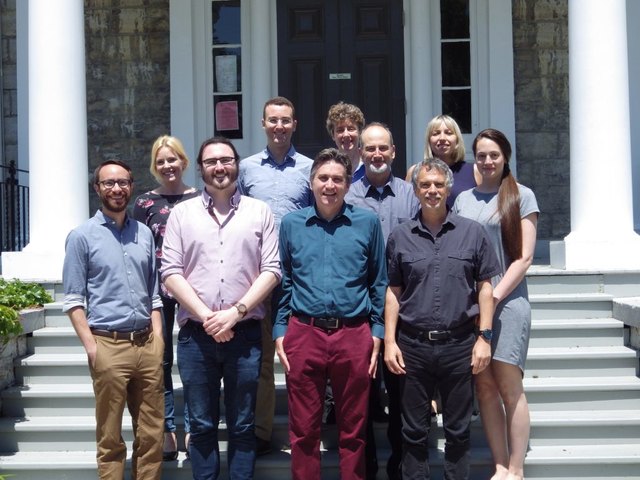
Workshop participants

Speakers at “Veganism and Beyond”.

On Saturday June 10, 2017, APPLE is hosting a conference on animal ethics and food ethics. Animal ethicists have always had a lot to say about food, but to date it has largely focused on a single issue: namely, whether it is unethical to raise and kill animals for food, and if so, whether there is an ethical imperative to adopt a vegan diet. This is clearly of fundamental importance, since most humans’ primary contact with animals is through eating them, and animal agriculture is responsible for the death and suffering of tens of billions of sentient animals every year. However, we believe that animal ethicists cannot and should not limit their engagement with food to “merely” the question of veganism. How a society feeds itself has profound implications for a wide range of social and political values, and veganism by itself does not ensure that a society’s foodways are consistent with justice for either humans or animals. Vegan food products can be produced in ways that are environmentally unsustainable, exploitative of humans, unsafe, or (indirectly) harmful to animals. The issue of veganism within animal ethics therefore needs to be situated within a larger framework of food ethics and food politics, beyond condemning the eating of animal “products” and animal agriculture. Fortunately, academic and popular interest in food has exploded, and there are now many monographs, collections and even journals devoted to “food ethics”, “food justice” and the “philosophy of food”. We believe that there is enormous promise in bringing animal ethics and food ethics together.

Confirmed speakers and conference titles:

  • Bob Fischer (Texas State University): “If Nothing Matters, There’s Nothing to Save: Nonideal Ethics and Arguments Against Eating Animals
  • Valéry Giroux (Université de Montréal): “Veganism as a Social Justice Movement: The Efficacy of Our Individual Commitment to the Ideology of Animal Liberation
  • David Kaplan (University of North Texas): “Is Meat Disgusting?
  • Andy Lamey (University of California, San Diego): “The Dinner of Double Effect
  • Josh Milburn (Queen’s University): “Just Fodder: Ethics in the Garden: Feeding Animal Friends and Foes
  • Victoria Millious and Samantha King (Queen’s University):”Paraveganism: Using Scholarly Interviews to Conceptualize a Political Food Framework
  • Kelly Struthers Montford (University of Alberta/University of Toronto) and Chloe Taylor (University of Alberta): “(Bey)On(d) Edibility: Towards a Nonspeciesist Food Ontology
  • Clare Palmer (Texas A&M University): “Should We Provide the Bear Necessities? Climate Change, Wild Animals and the Ethics of Supplementary Feeding
  • Jeff Sebo (University of North Carolina at Chapel Hill): “The Future of Meat

There is no conference fee and all are welcome, but space is limited, so if you would like to attend, or have any questions, please contact the workshop co-organizers: Josh Milburn (jmilburn02@qub.ac.uk) and/or Will Kymlicka (kymlicka@queensu.ca).

Workshop on “Animal Labour: Ethical, Legal and Political Perspectives on Recognizing Animals’ Work”

Start Date

Friday May 18, 2018

End Date

Saturday May 19, 2018

Time

9:00 am - 5:00 pm

Location

The Tett Centre, Kingston

On May 18-19, 2018, the Animals in Philosophy, Politics, Law, and Ethics research group (APPLE) at Queen’s University will be hosting a workshop on the emerging topic of animal labour. For both humans and non-human animals, work is often an important dimension of life, and a fundamental determinant of well-being. At its best, work can be a source of social recognition, personal meaning and material security, but it can also be a site of intense instrumentalization, exploitation and degradation. Our aim is to explore the potential benefits and pitfalls of recognizing animals as workers. Under what conditions could animal labour become a source of meaning and well-being for animals? What sorts of legal, political and social changes – both in the workplace and in the broader society – would be required? How can we ensure that talk of animal work is not used simply to whitewash existing forms of exploitation? Against the long history of instrumentalizing animal labour, is it realistic to think that we can create interspecies workplaces that are just?

During this two-day workshop, we explore these questions from multi-disciplinary perspective. Our speakers include:

  • Omar Bachour, PhD Candidate and Instructor, Department of Philosophy, Queen’s University
  • Alasdair Cochrane, Senior Lecturer in Political Theory, Department of Politics, University of Sheffield
  • Charlotte Blattner, Postdoctoral Fellow, Department of Philosophy, Queen’s University
  • Jessica Eisen, Assistant Professor, Faculty of Law, University of Alberta
  • Nicolas Delon, Law and Philosophy Fellow, Faculty of Law, University of Chicago
  • Kendra Coulter, Associate Professor, Department of Labour Studies and Chancellor’s Chair for Research Excellence, Brock University
  • Renée D’Souza, Master’s of Environmental Studies Candidate, Queen’s University
  • Alice Hovorka, Professor in the Department of Geography and Planning, and Director of the School of Environmental Studies, Queen’s University
  • Dinesh Wadiwel, Senior Lecturer in Human Rights and Socio-Legal Studies, School of Social and Political Sciences, University of Sydney
  • Sue Donaldson, Research Associate, Department of Philosophy, Queen’s University
  • Will Kymlicka, Canada Research Chair in Political Philosophy, Department of Philosophy, Queen’s University

The workshop is co-sponsored by the APPLE research group at Queen’s University and the Humane Jobs initiative at Brock University, and is co-organized by Charlotte Blattner, Kendra Coulter and Will Kymlicka. It will be held at the Tett Centre in Kingston. Prior to the event, we will circulate the papers to all participants to ensure that everyone who wishes to partake in our discussions will be able to do so.

If you wish to attend, or want more information, please send an email to charlotte.blattner@queensu.ca. Attendance is free, but advance registration is required due to limited seating.


[Photo Credit (Horse) - We Animals Media - WAM 34356]

The Animal Turn: Beyond Species Boundaries

Date

Saturday March 20, 2021
4:30 pm - 6:00 pm

Location

APPLE is pleased to be sponsoring a panel on “The Animal Turn: Beyond Species Boundaries” at the Scholarship Beyond Boundaries Conference, hosted by the Society of Graduate and Professional Students, on Saturday, March 20th, 2021, from 4:30-6:00pm.

Speakers include Harshavardhan Thyagarajan and Paulina Siemieniec, and the panel will be moderated by Will Kymlicka.
 

Margaret Robinson: Is the Moose Still My Brother if We Don’t Eat Him?

Date

Friday March 12, 2021
4:00 pm - 5:30 pm

Location

Zoom

APPLE is pleased to announce an upcoming zoom event with Professor Margaret Robinson, Department of Sociology and Social Anthropology, Dalhousie University.

Title: Is the Moose Still My Brother if We Don’t Eat Him?

Date & Time: Friday, March 12 at 4:00-5:30 PM EST

Please note: The paper will be circulated in advance for a Q&A discussion format. Please contact Jishnu Guha-Majumdar (jgm12@queensu.ca) to receive a copy and the zoom link.

Margaret Robinson profile


Dinesh Wadiwel: The Courage to Hear? Animals, Foucault and Parrhēsia

Date

Friday February 12, 2021
4:00 pm - 5:30 pm

Location

Zoom

APPLE is pleased to announce an upcoming zoom event with Professor Dinesh Wadiwel, University of Sydney.

Title: The Courage to Hear? Animals, Foucault and Parrhēsia

Date & Time: Friday, February 12 at 4:00-5:30 PM EST

Please note: The paper will be circulated in advance for a Q&A discussion format. Please contact Jishnu Guha-Majumdar (jgm12@queensu.ca) to receive a copy and the zoom link.


Abstract:

A common tactic utilised by animal advocates involves the display of graphic footage or imagery (such as video footage from a slaughterhouse or factory farm) which depicts to its audience the “truth” of human violence towards animals. However the utility of these political tactics remains uncertain. Visibility of animal suffering does not necessarily lead to practice change; and to an extent, at least when it comes to images of animal suffering, many people just “do not want to know.” In this paper I want to explore Foucault’s final lectures at the Collège de France, which feature a close analysis of “speaking freely” or parrhēsia. Here I am particularly attracted by the image Foucault depicts of an act which constructs the agent as a truth telling subject who seeks to interrupt an order of knowledge. But, as Foucault describes, this truth telling can only occur in a particular context, including one where the listener is ready to hear to truth: “parrhēsia is the courage of truth in the person who speaks … but it is also the interlocutor’s courage in agreeing to accept the hurtful truth that he hears” (2012, 13). As such, parrhēsia depends on sites of politics which establish a relation between truth teller and listener, such as in education (the relation between the teacher and student) and within political movements (such as in the development of “revolutionary discourse”). In this context, I will finally speculate on the correspondence between Foucault’s understanding of parrhesistic truth-telling, and the role of intellectuals in social movements, in particular as described by Antonio Gramsci.


[Photo Credit: We Animals Media - WAM 33137]


Symposium on Kyle Johannsen’s Wild Animal Ethics

Start Date

Friday April 9, 2021

End Date

Thursday April 8, 2021

Time

11:00 am - 2:00 pm

Location

Zoom
book cover of Kyle Johannsen's Wild Animal Ethics

APPLE is happy to sponsor a virtual symposium on Kyle Johannsen’s recent book Wild Animal Ethics: The Moral and Political Problem of Wild Animal Suffering

The symposium will be held over Zoom.

Friday April 9 from 11 AM – 2 PM (Eastern Time)

Featuring commentaries by Nicolas Delon (New College of Florida), Bob Fischer (Texas State), Gary O’Brien (Oxford), and Clare Palmer (Texas A&M).

For information about the book, please see the description below.

You may also be interested in an interview about the book, that recently aired on the New Books Network.

“Though many ethicists have the intuition that we should leave nature alone, Kyle Johannsen argues that we have a duty to research safe ways of providing large-scale assistance to wild animals. Using concepts from moral and political philosophy to analyze the issue of wild animal suffering (WAS), Johannsen explores how a collective, institutional obligation to assist wild animals should be understood. He claims that with enough research, genetic editing may one day give us the power to safely intervene without perpetually interfering with wild animals’ liberties.”

Questions addressed include:

  • In what way is nature valuable and is intervention compatible with that value?
  • Is intervention a requirement of justice?
  • What are the implications of WAS for animal rights advocacy? 
  • What types of intervention are promising?