Andrew Lopez

Portrait of Andrew Lopez

Andrew Lopez

Doctor in Philosophy

Andrew specializes in animal studies, feminist philosophy, political philosophy, and philosophy of biology. He brings these fields together to understand the cognitive and epistemic lives of nonhuman animals and how this understanding should inform political philosophy concerned with interspecies relations.


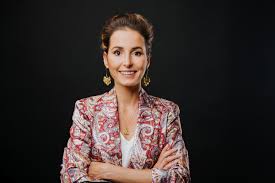
Alisha Piercy

Portrait of Alisha Piercy

Alisha Piercy

Artist-researcher and doctoral candidate

Alisha Piercy is an artist-researcher and doctoral candidate in Cultural Studies (Research-Creation) at Queen’s University. Her interdisciplinary work includes drawing installation, film, and she is the author of poetry and novels. Her dissertation, a speculative theory-fiction, engages with research in hauntology, living Indigenous sci-fi, speculative design and multispecies worlding. The work explores the specters of colonial inheritance and haunting as a creative force that unsettles human relationships to ownership of land, water, and other-than-human worlds. In her story, propertied land-space is not banished but reconfigured as an imaginary of corridors that self-build and steward. Alisha first explored this topic as a Banff Centre for the Arts Writing Resident in 2021. Her fiction is published with Book*hug (Toronto). (alisha.piercy@queensu.ca, website: alishapiercy.com)

Yamini Narayanan – Animating caste

Date

Thursday April 15, 2021
4:00 pm - 6:00 pm

Location

APPLE is pleased to announce an upcoming zoom event with Yamini Narayanan from Deakin University, Australia.

Title: Yamini Narayanan Animating caste: Visceral geographies of pig caste, and violent nationalism in Chennai city.

Date and Time: April 15th, 4PM EST (GMT -5)

Please note that Professor Narayanan’s talk is on Thursday and not the usual Friday. 

Contact Jishnu Guha-Majumdar (jgm12@queensu.ca) to receive the zoom link.


Abstract: 

The paper introduces porcine bodies as landscapes upon which caste as wildness, primitive, or savage are inscribed and asserted in India, by the Hindu Right and the Dalit Right, to respectively advance parochial nationalisms. The general obscuration of the pig in violent nationalist discourses, is itself due to her inherent caste status as impure/polluting. Hindu Vedic scriptures endorse a civilizational rhetoric of the cows as Brahminical and divine, and the pigs as associated with filth and ferality. Caste advances or obstructs political and economic power, and is interlocked with market capitalism, which relies on nature – and casteised subhuman/nonhuman bodies – as both profitable (and venerable), and expendable (and despicable). The visceral socio-political contempt the pig evokes is intertwined with their use in performing economic labor as waste scavenger, and political labor as superfluous to a nation in which pigs, and people associated with pigs do not belong. Via empirical work in Chennai city, this paper focusses the pig, ecologically and sociologically wild, feral and promiscuous, as enmeshed in a long-enduring, constructed caste conflict around Brahmin/Dravida; Hindu/Tamil; civilized/primitive; and even, human/animal binaries. Finally, it specifies species as also core to identity politics, as part of a transformative praxis to a post-casteist society.


[Photo Credit: We Animals Media - WAM30996]

Animal Studies Speaker Series: Anat Pick

Start Date

Thursday February 3, 2022

End Date

Friday February 18, 2022

Time

1:00 pm - 2:30 pm

Location

Zoom
Anat Pick will be giving a zoom talk entitled “Film Farm: Kelly Reichardt’s Gastro-aesthetics” on Friday February 18, 2022 from 1:00-2:30 pm (ET). This will be a 45 minute talk followed by Q&A/discussion.

Dr. Pick is a Research Fellow at the Helsinki Collegium for Advanced Studies, and Reader in Film at Queen Mary University of London.

To receive the zoom link, please send an email to Will Kymlicka: kymlicka@queensu.ca  

Abstract: A number of recent films, including Viktor Kossakovsky’s Gunda (2020), Andrea Arnold’s Cow (2020), and Kelly Reichardt’s First Cow (2019) feature farmed animals at their centre. Each offers a different iteration of what I am calling “gastro-aesthetics,” cinematic entanglements between the alimentary and the visual. Gastro-aesthetics thinks through cinema’s dual impulse to look and to eat, to preserve and devour the world within and beyond the frame. In First Cow, aesthetic and alimentary pleasures converge in the figure of the titular cow as an image and as a source of milk. How should we think about the visual consumption of images of dairy consumption?  

From River of Grass (1994) through Wendy and Lucy (2008) to First Cow, animals are ubiquitous in Reichardt’s cinema. Yet while dogs display autonomy and agency, exemplifying Reichardt’s aesthetics of contingency, farmed animals remain—in film as in life—sources of value-extraction. The gentle sociality at the heart of First Cow and the film’s stylistic and narrative openness are subtended by agricultural-colonial practices that control and consume animals and indigenous people. In the face of Reichardt’s attentiveness to nature and the subtleties of interspecies relations, this first cow remains the film’s obscure object of extraction. Tracing the story of milk in First Cow I explore how films and farms partake in the domestication, cultivation, and processing of animal life. Could film be conceived otherwise, not as a farm but as a sanctuary?


Lecture about the history of urban cows in Kingston

Date

Tuesday May 23, 2023
12:00 pm - 2:00 pm

Location

Kingston City Hall

Claudia Hirtenfelder, APPLE Fellow, discusses her research in a Heritage Hour talk held in Kingston’s City Hall on the 20th of April 2023. Her presentation was titled “Transgressive, Risky, and Waste: The Historical Problematization of Cows in Kingston.”

Watch a short video made by the CBC or watch the full lecture.


Animals in Science and Education Week featuring Dr. Helena Pedersen

Start Date

Monday October 16, 2017

End Date

Wednesday October 18, 2017

Time

3:00 pm - 12:30 pm

Location

APPLE and the Lives of Animals Research Group are delighted to be hosting a series of events featuring Dr. Helena Pedersen (University of Gothenburg, Sweden) an internationally renowned scholar of critical animal pedagogy. Professor Pedersen is visiting under the auspices of the Principal’s International Visitor program, from October 16-18, 2017.

Dr. Pedersen will deliver a public lecture entitled “Posthumanist Education: Rethinking Human-Animal Relations in Teaching and Learning”. This Lecture will be held at the Queen’s University Club (158 Stuart Street, Kingston), on Tuesday October 17th from 3:00 to 5:30pm. Refreshments will be served. All welcome.

Dr. Pedersen will take part in a workshop on “Animal Studies Education, Research and Advocacy” on Wednesday October 18, from 9:00 am to 12:30 pm. This event is open to faculty, postdocs and graduate students who teach and research in Animal Studies. If you are interested in attending, please contact Sue Donaldson.


Video now available

The recording of Dr. Pedersen’s talk “Posthumanist Education: Rethinking Human-Animal Relations in Teaching and Learning” is now available to watch on QSpace (1h23):


[Photo Credit (Seal): We Animals Media - WAM 36706]


“Animals and Society” at the Rotman Research Roundtable

Date

Friday November 10, 2017
12:00 pm - 5:00 pm

Location

The Rotman Research Roundtable (University of Toronto) is holding an afternoon workshop on “Animals and Society” on Friday November 10, 2017, organized by Dr. Lisa Kramer. There is no charge for this event, but advance registration is required.

Please visit the Rotman website for details and registration.

SYNOPSIS: This half-day conference aims to bring together scholars interested in exploring the rapidly shifting attitudes of humans toward nonhuman animals, with emphasis on implications for society, including animal advocacy, animal rights, the use of animals in for-profit and non-profit enterprise, and related topics. Scientific discoveries are shedding new light on animals’ intelligence, their capacity to feel pain, and their predisposition to form social bonds. As a result of these developments, public institutions and the legal system are facing increased public scrutiny and pressure from animal advocates to change the way animals are represented and treated by humans. Research in the social sciences, sciences, and humanities is rapidly coming online to examine the evolving status of animals and the practical implications of that evolution for both humans and animals. In this half-day conference, and in the planned monthly working group meetings that are intended to emerge following the conference, we will consider and discuss working papers presented by researchers from various disciplines. Coming from an interdisciplinary point of view and using all the tools at our disposal, we hope to advance research on animals and society.

AGENDA: Specific times may shift in the final schedule. Each presentation block will consist of 25 minutes of content from the presenter(s) followed by 10 minutes of interactive questions/comments.

  • 12:15-12:45pm: Check-in, casual welcome lunch, and mingling
  • 12:45-12:50: Opening Remarks
  • 12:50-1:25: Matthew Feinberg, Rotman School of Management, University of Toronto — Understanding the Process of Moralization: How Eating Meat Becomes a Moral Issue
  • 1:25-2:00: Kendra Coulter, Centre for Labour Studies, Brock University — Humane Jobs
  • 2:00-2:35: Nicola Lacetera and Lisa Kramer, Rotman School of Management & UTM Department of Management, University of Toronto — The Making of Moral Repugnance in Dietary Choice: An Experimental Analysis
  • 2:35-3:00: Coffee & Snacks
  • 3:00-3:35: Sue Donaldson and Will Kymlicka, Department of Political Science, Queen’s University — Farmed Animal Sanctuaries as Potential Models of Interspecies Society
  • 3:35-4:10: Jody Berland, Department of Humanities, York University — Animal Agriculture and Climate Change
  • 4:10-4:45: Kristin Andrews, Department of Philosophy, York University — Animal Personhood
  • 4:45-4:50: Closing Remarks


[Photo Credit (Ducks): We Animals Media - WAM 37005]

Jessica Eisen talk on “Milked: Farmed Animals and the Law”

Date

Monday November 20, 2017
4:30 pm - 6:00 pm

Location

Join the Queen’s Animal Justice Club as we have doctoral candidate Jessica Eisen discuss contemporary Canadian dairy practices, the laws that protect (and sometimes fail to protect) animal welfare, and the many ways that law shapes the lives of farmed animals.

This event will take place on November 20th at 4:30pm in Room 202 at Queen’s Faculty of Law.

Jessica Eisen is a doctoral candidate at Harvard Law School and a Visiting Researcher at Osgoode Hall Law School’s Institute for Feminist Legal Studies. Her research interests include comparative constitutional and equality law, feminist legal theory, animal law, and food law and policy. Her work has been published in the Journal of Law and Equality, the Animal Law ReviewTransnational Legal Theory, the Canadian Journal of Poverty LawQueen’s Law Journal, the Michigan Journal of Law Reform (forthcoming) and the International Journal of Constitutional Law (forthcoming).

Light refreshments will be served!

Elisabeth Ormandy on “What Legal Protection do Animals in Science in Canada Have?

Date

Friday February 2, 2018
2:30 pm - 4:00 pm

Location

Sir John A Macdonald Hall, Room 211

The Queen’s Animal Justice Club has invited Elisabeth Ormandy, from University of British Columbia, at Queen’s university to give the talk “What Legal Protection do Animals in Science in Canada Have?” this week at Queen’s University. Dr Ormandy is also the Executive Director of the Animals in Science Policy Institute. Everyone is welcome to attend.

Friday February 2, 2018
2:30-4:00 PM
Room 211, Sir John A Macdonald Hall


Further information about the speaker and the abstract:

A UK native, Elisabeth holds an undergraduate honours degree in Neuroscience, and a Masters degree in Applied Animal Behaviour and Welfare, both from the University of Edinburgh. She graduated her PhD in Animal Ethics from the Animal Welfare Program at the University of British Columbia (UBC) in 2012, and has since completed a SSHRC-funded post-doctoral fellowship (2012-2014). Elisabeth was also a research fellow in Animal Policy Development for the Canadian Council on Animal Care (CCAC) from 2009-2011.

Elisabeth’s background in science and animal behaviour/welfare/ethics has driven her passion to critically evaluate the use of animals in science, and to promote the replacement of animals in research, testing and education as best scientific practice. In 2015, she co-founded, and is current Executive Director for, the Animals in Science Policy Institute – a registered charity that aims to build an ethical culture of science through promotion of the reduction and replacement of animals in science.

In addition to her role as Executive Director, Elisabeth is an instructor at UBC and currently teaches Animals and Society, and Ethical Issues in Science. She is a volunteer for the Scientists and Innovators in Schools (SIS) program offered through BC’s Science World, and sits on the Environment and Animal Welfare Committee of the Vancouver Foundation and the Categories of Invasiveness sub-committee of the CCAC. Elisabeth is also an Advisor for both the Canadian Centre for Alternatives to Animal Methods (CCAAM) and the Humane Education Coalition.

Charlotte Blattner on “Animals Are (Forced) Workers, Too”

Date

Thursday March 15, 2018
4:00 pm - 6:00 pm

Location

Charlotte Blattner


The Philosophy Department at Queen’s University is hosting  APPLE’s member Charlotte Blattner at the department’s weekly colloquium on March 15th, at 4pm in Watson Hall 517. Everyone welcome.

Title: “Animals Are (Forced) Workers, Too — Individual and Collective Self-determination of Working Animals”

Abstract: Can animals used for farming, research, circuses, zoos, or companion services be seen as “labourers”? Should animals be granted worker rights? Those are questions that preoccupy a growing number of animal rights theorists who explore the viability of the concept of animal labour. Recognizing animals as workers, they point out, could help ensure and concretize basic rights for animals that are still seen as utopian by many, notably through the right to retirement or the right to safe working conditions. However, existing theories of animal labour do not yet cover and sometimes even reject what is arguably the most fundamental labour right of all: the right against forced labour. As a result, animal workers can, for example, be denied an opportunity to decide what type of labour they perform or to co-determine the broader institutional and political aspects of work. In response to these theories, I examine whether animals require a right against forced labour and explore how this right can be secured, at three different levels: (1) initial recruitment into work; (2) the appropriate range of employment options; and (3) collective representation of animal workers through trade unions and workplace councils.


[Photo Credit (Camel): We Animals Media - WAM 36683]